Plenary Dialogues
For details, click Plenary Dialogue.
-
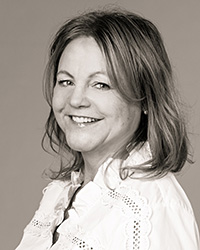
Helena Roos
Sweden
Helena Roos is Associate Professor in Mathematics Education at Malmö University, Sweden. Her research focuses on inclusive mathematics education, special educational needs in mathematics, equity, and participation. She has a particular interest in mathematics difficulties, dyscalculia, and inclusive learning environments. Helena is actively involved in national and international research collaborations and works to strengthen connections between research, educational practice, and policy.
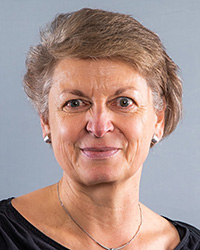
Petra Scherer
Germany
Petra Scherer is professor for mathematics education at the University of Duisburg-Essen, Germany. Her research covers analyses of learning and teaching processes in primary school as well as in special education and inclusive education, especially with respect to disabilities and difficulties in learning mathematics. Moreover, she is involved in developmental research of materials for classroom practice, pre-service and in-service courses and programs for teachers’ professionalization.
Abstract
The puzzle of inclusive mathematics education: Future challenges and emerging chances
Imagine opening a puzzle-box, only to discover that the pieces come from different sets. A few fit together effortlessly, while others refuse to lock into place no matter how you turn them. And yet the picture on the box, the promise of inclusive mathematics education, remains the same. The question we want to pose is not whether the puzzle can be solved, but what it takes to make the pieces fit.
In this keynote we use the puzzle as a metaphor for the multifaceted landscape of inclusive mathematics education. Each piece represents a crucial perspective: the teacher student forming a professional identity in relation to inclusion in mathematics, the teacher navigating inclusive mathematics classrooms, the pupil in school experiencing mathematics through her or his own cultural and emotional lens. Policy documents and curricular frameworks add structural contours, while critical and humanistic perspectives remind us that inclusion is fundamentally about dignity, participation, and the right to meaningful mathematical engagement.
Learners in special educational needs in mathematics highlight both, the strengths and the limitations of current systems. Their experiences reveal where the puzzle pieces align, and where they do not fit and the picture breaks down. Taking into account insights from previous CERME conferences and national as well as international research traditions, we in this keynote explore different aspects of inclusive mathematics education and how these aspects shape our joint understanding of what inclusion in mathematics education can be. Based on that, we discuss future challenges and emerging chances for inclusive mathematics education like evolving societal expectations, new understandings of diversity, subject-specific relevance, and future research questions.
This keynote invites participants to engage with the puzzle itself to examine which pieces we have, which ones are missing, and how we might collectively re‑imagine the picture of inclusive mathematics education for the years to come.

-
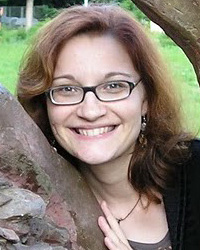
Kitti Páleníková
Slovakia
Kitti Páleníková is an assistant professor in the Department of Mathematics at Constantine the Philosopher University in Nitra, Slovakia. She studied mathematics and informatics teacher education and holds a PhD in the Theory of teaching mathematics. She has also taught at a lower secondary school, gaining first-hand experience of classroom teaching. Her work focuses on mathematics education, particularly the use of digital technologies, project-based learning, and the teaching and learning of mathematics in real-life contexts. Her research interests include mathematical problem posing and solving, the development of diagnostic tools for assessing students’ mathematical understanding, and Content and Language Integrated Learning (CLIL) in mathematics education. She teaches mathematics and statistics to students in non-mathematics programmes and supervises student theses. She has participated in national and international research and educational projects.
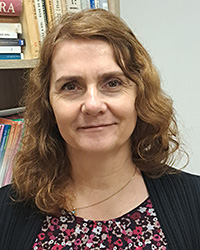
Ingrid Semanišinová
Slovakia
Ingrid Semanišinová is an Associate Professor in the Department of Mathematics, Faculty of Science, Pavol Jozef Šafárik University. She specialises in designing activities and tasks that investigate and deepen mathematics teachers’ knowledge of the mathematical ideas embedded in them. She actively takes part in research projects, conferences and collaboration with the professional community, aiming to link theoretical knowledge with teaching practice. She is involved in various forms of teacher professional development, including informal mathematics education (teachers’ club), summer schools for teachers working with gifted students, and two national projects on teachers’ professional development in the context of the rise of digital technologies.
Abstract
What makes a mathematics teacher ready? Initial teacher education and professional development
What does it mean for a mathematics teacher to be “ready”? Initial teacher education develops the knowledge needed to enter the profession, yet many demands of teaching become visible only in real classrooms. Professional development is then expected to respond to needs emerging from practice throughout teachers’ careers.
In this plenary dialogue, we approach readiness from two complementary perspectives: university-based initial teacher education and the professional development of practising teachers. We ask what can reasonably be expected of prospective teachers and what develops mainly through experience. Using concrete activities, we focus on interpreting students’ mathematical thinking, responding to errors and unexpected strategies, and making didactical decisions, and discuss whether and how working with them differs for prospective and practising teachers.
We treat readiness as a developmental process rather than an outcome and explore how initial education, professional development and closer cooperation between universities and schools can complement each other.


